Sit vs Stand: What should I do?
For decades, sitting has been the default position for work, study, and reading. However, modern research shows that prolonged sitting can negatively impact health. So, maybe we should stand? Well, it's not that easy to say that's the solution either, as too much standing also negatively impacts your health. So, which is it? Sit or stand? Which is better? Is standing better than sitting or is sitting better than standing? Does the setting matter? Is it better to sit or stand at work, or is it better to sit or stand at play? What should I do with stand vs sit and sit vs stand?
Well, the key to better well-being, apparently, lies in finding a balance between them, between sitting and standing. And no... it doesn't matter whether you're at work or play.
Let's explain.
The Health Risks of Too Much Sitting

Many people today spend 8–10 hours per day sitting, whether working at a desk, driving, or using digital devices. Extended sitting can lead to:
- Poor posture
- Back and neck pain
- Reduced blood circulation
- Increased risk of weight gain
- Higher chances of heart disease and metabolic issues
When we sit for long periods, our muscles become inactive and our metabolism slows down. This reduces the body's ability to burn calories efficiently and regulate blood sugar levels.
This leads us to understand that there is a difference between a short sit vs long sit.
Is Standing the Solution?


Standing desks have become increasingly popular as an alternative to traditional desks, to the point that there are plenty of people who are actively searching for why standing is better than sitting. Standing while working certainly does offer several benefits:
- Encourages better posture
- Improves blood circulation
- Burns slightly more calories than sitting
- Reduces pressure on the lower back
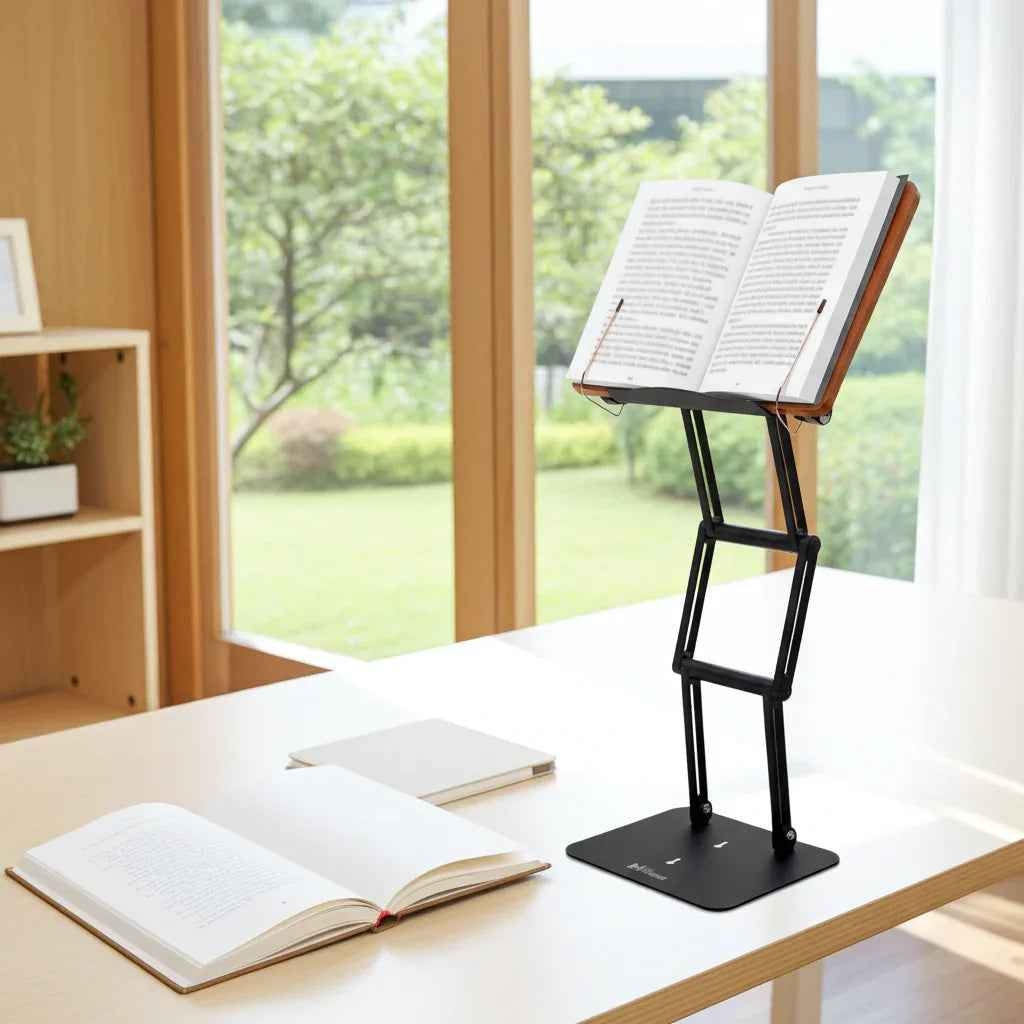
The Common Pitfall: Many people switch to a standing desk but leave their books or laptops flat on the surface. This leads to "standing slouch," which is often more damaging to the lower back than sitting. To truly see the health benefits of a standing desk, you must use an ergonomic bookstand to bring your work to eye level while standing.
However, standing all day is not ideal either. Prolonged standing can cause:
- Foot pain
- Leg fatigue
- Joint stress
- Varicose veins
Which brings us back to the topic that we opened with: how to deal with the issue of sitting vs standing and standing vs sitting? What should be done: sitting or standing? Standing or sitting?
What IS clear, no matter how you look at it, is that prolonged standing or sitting isn't good for anyone. [Check out my blog of ancient wisdom on this topic for more perspective}
The Best Approach: Alternate Between Sitting and Standing
Health experts generally recommend alternating positions throughout the day.
A common guideline is:
- Sit for 30–60 minutes
- Stand for 15–30 minutes
- Move or stretch regularly
This combination helps keep muscles active while avoiding strain on any one part of the body.
Using adjustable equipment can help support these transitions. See our usage guide for proper setup.
Movement Is the Real Key


Regardless of whether you sit or stand, regular movement is essential. Simple habits can make a big difference:
- Stretch every hour
- Walk for a few minutes
- Adjust posture frequently
- Use ergonomic furniture
Best Desk Setup for Studying
Improve Your Study Setup
If you're looking to elevate books, tablets, or laptops to a more comfortable reading position, an adjustable stand can make a significant difference.
👉 Explore The Stander →
Conclusion
The debate between sitting and standing isn’t about choosing one over the other. The healthiest approach is a dynamic work style that includes both positions along with regular movement. By creating a balanced routine, individuals can reduce health risks and improve comfort throughout the day.
Best Book Stand for Studying