If your laptop stand wobbles every time you type, slides when you rest your wrists, or tops out several inches below eye level, you do not have a laptop stand problem. You have a workstation problem. That is the real point of any heavy duty laptop riser review: not whether a stand looks sleek in a product photo, but whether it can hold real weight, reach real ergonomic height, and stay stable during long hours of focused work.
Most people shopping this category are not trying to create a decorative desk. They are trying to stop craning their neck, stop hunching forward, and stop improvising with stacks of books that make the desk look like a small architectural failure. If that sounds familiar, the right riser can make an immediate difference. The wrong one becomes one more object you regret buying by Thursday.
What a heavy duty laptop riser review should actually measure
A useful heavy duty laptop riser review needs to go beyond simple claims like sturdy or adjustable. Plenty of stands are called heavy duty because they are made of metal. That is not enough. The real test is whether the stand remains planted and usable when supporting a laptop you actually work on, especially if you also need room for typing, viewing, reading, and occasional repositioning.
The first factor is height range. Many stands technically elevate a laptop, but not enough to bring the screen close to eye level for an adult seated at a desk. That means you still bend your neck downward, only now with a more expensive accessory. A stand that rises significantly higher gives you more than comfort. It gives you options for seated work, taller users, countertop setups, and moderate standing use.
The second factor is stability under load. This matters even more if you use a heavier workstation laptop, rest your hands near the platform while reading, or shift between laptop and textbook. A flimsy hinge ruins the whole experience. So does a narrow base that transfers every movement into a visible screen shake.
The third factor is the platform itself. A heavy duty riser should not be designed only for thin ultrabooks and light tablets. Serious users need a surface and support lip that can handle a larger laptop, thick books, dense textbooks, legal materials, and other substantial items without feeling like they are asking too much from the hardware.
The core trade-off: compact convenience vs real support
This is where the market usually splits. On one side, you have travel-friendly aluminum stands that fold flat and look tidy. They are fine if your main goal is occasional elevation in a coffee shop and you do not mind using a separate keyboard every time. On the other side, you have stands built more like workstation tools. They take up more visual presence, but they also do more.
That trade-off matters because heavy duty usually means the product is optimized for stability and usable height, not for disappearing into a laptop sleeve. If you need something for short bursts of use, almost any decent stand can work. If you spend hours reading, typing, presenting, or studying from a laptop and printed materials, the category changes. Then build quality is not a luxury. It is part of your ergonomic setup.
Stability is not glamorous, but it is the whole game
People often underestimate how much screen wobble affects concentration. It sounds minor until you are in the middle of writing, studying, or reviewing a dense document and every touch sends the display into motion. At that point, even a nicely designed stand feels cheap.
A true heavy duty riser should feel anchored. That usually comes from a combination of rigid materials, quality joints, and geometry that does not become less stable as the height increases. Some stands feel solid at low settings and become nervous and shaky when extended. That is a design limitation, not bad luck.
For serious desk work, stability matters for more than comfort. It supports flow. If the platform feels trustworthy, you stop thinking about the stand and focus on the task. That is exactly what an ergonomic tool should do.
Height changes everything
The biggest performance gap in this category is not color, finish, or portability. It is vertical range. A stand that raises a device a few inches may look helpful, but it often leaves the screen below proper viewing height. You still adapt your body to the tool instead of the tool adapting to your body.
This is especially relevant for users who work with both digital and printed materials. A higher lift lets you alternate between a laptop, textbook, or reference volume without repeatedly dropping your gaze and collapsing your posture. It can also make a surprising difference for people who use kitchen counters, shared desks, or standing setups that are not perfectly tailored.
Some premium stands now push far beyond the standard low-rise format. That is where the category starts becoming genuinely useful for posture correction rather than mildly decorative. A platform that can elevate materials as high as 17.8 inches above the desk is operating in a different class from most commodity stands, particularly if it stays stable while doing it.
Build quality matters more for books than laptops
Here is the funny part. Many so-called laptop risers are more challenged by a heavy textbook than by a laptop. That tells you something about the category. Products designed around slim consumer electronics often struggle when asked to support serious reading and study.
For students, researchers, attorneys, clergy, and professionals who work with large printed materials, a riser has to do more than hold a screen. It should support weight confidently and present pages at a readable angle without sagging, slipping, or threatening a desk-side tragedy. If your workflow includes thick books, binders, sheet music, or manuals, this is not a fringe use case. It is the job.
That is why professional-grade materials matter. Aluminum construction helps, but the real story is in the joints, pivot points, and locking mechanisms. Stainless steel joints and well-engineered adjustment points tend to hold up better over time than cheaper assemblies that loosen after repeated use.
Who should buy a heavy duty model
A heavy duty laptop riser review is most relevant for people who stay at a desk long enough to feel the cost of bad ergonomics. If you are a student working through dense reading assignments, a remote professional on a laptop all day, or a scholar moving between texts and notes, the difference is measurable. Less neck flexion generally means less strain. Better screen and page placement usually means longer periods of focused work before discomfort starts negotiating for your attention.
It is also a smart category for people who want one stand to serve multiple roles. The best heavy duty models are not just laptop accessories. They can function as a book stand, tablet support, cookbook holder, sheet music rest, or portable lectern. That versatility matters if you prefer tools that earn their footprint.
By contrast, if you only need a stand for occasional video calls or light browsing, a simpler model may be enough. There is no virtue in overbuying. The right choice depends on how seriously you use the desk.
A realistic review of premium heavy duty stands
At the premium end of the market, the best models justify their price by solving problems that cheaper stands merely soften. They deliver more height, more stability, and broader use cases. They are built for repeated adjustment and longer ownership, not for being replaced after the first hinge starts wobbling.
That does not mean every premium stand is automatically worth it. Some are beautifully finished but still limited in range or awkward with heavier materials. The useful test is simple: does the stand improve posture in a noticeable way, stay stable under real use, and support the actual mix of devices and books you use each week?
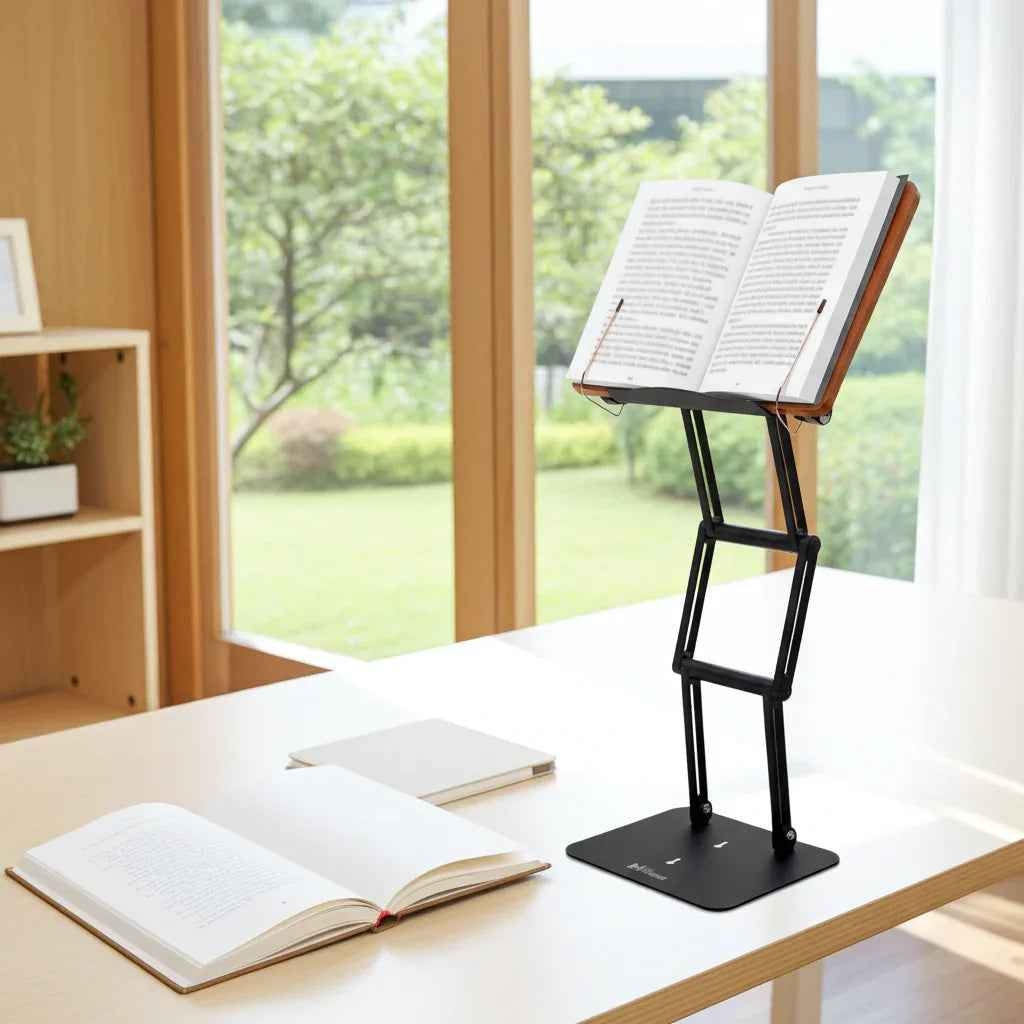
One standout approach in this space comes from designs that treat the stand less like a gadget and more like ergonomic furniture for the desktop. That is where products such as The Stander 1.1 distinguish themselves. A tall adjustment range, durable aluminum construction, stainless steel joints, and support for laptops as well as serious books make that kind of platform much more compelling for demanding users than the average fold-flat stand. It feels closer to a modern shtender than a generic accessory, which is exactly the point for people who read and work with purpose.
The verdict on this heavy duty laptop riser review
If your work is light, mobile, and occasional, a basic stand can be fine. If your days involve hours of reading, writing, studying, presenting, or switching between laptop and printed material, heavy duty is not overkill. It is the category where ergonomic claims start becoming believable.
Buy for height, stability, and long-term structure first. Everything else is secondary. Your neck does not care whether the stand matches your desk mat.
The best desk tools are the ones that quietly remove friction from serious work. When a riser holds the screen or page where your eyes need it, keeps your posture honest, and stays solid under pressure, you feel the difference almost immediately.