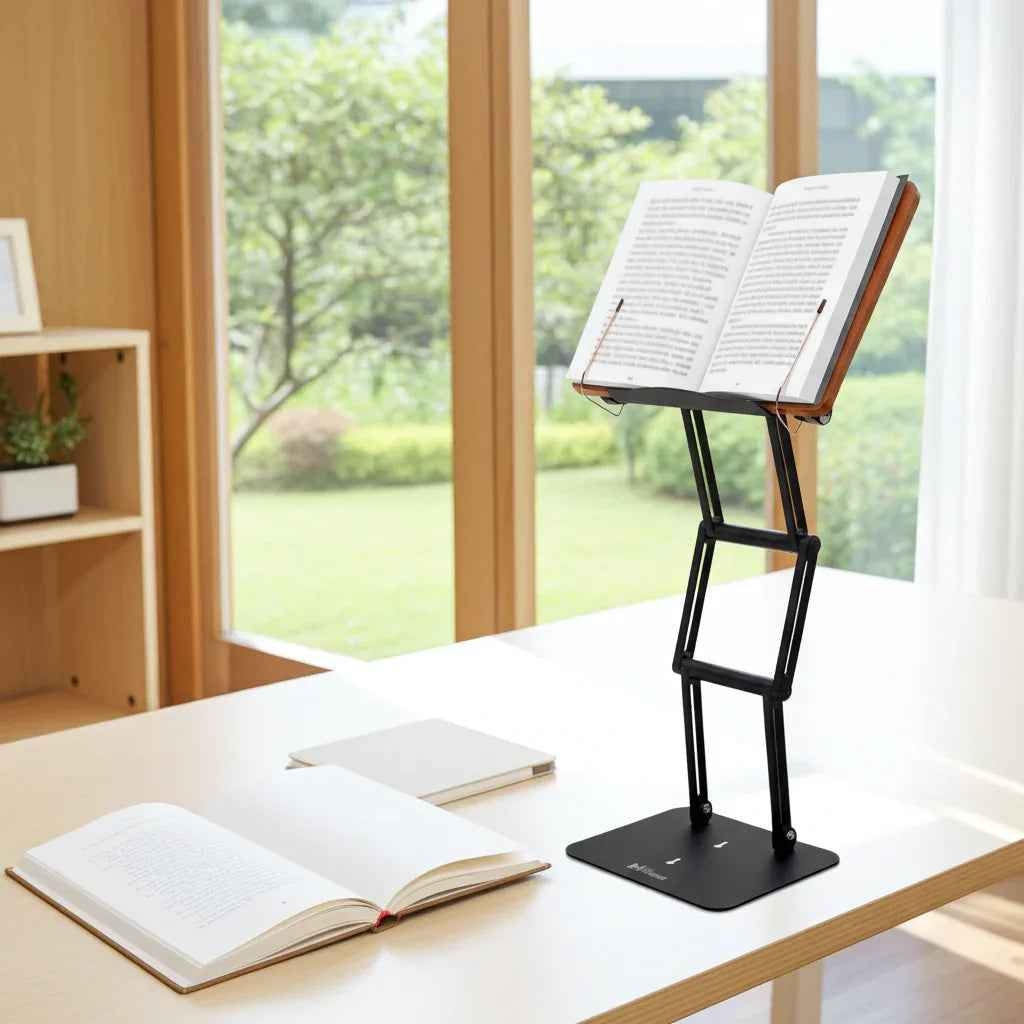
If your neck starts folding toward your laptop by hour two, your body is giving you a fairly honest review of your setup. That is why so many people ask, are laptop stands good for posture? The short answer is yes - but only when the stand solves the real problem instead of just making your desk look more organized.
A laptop by itself puts the screen and keyboard in the same place, and that is where the ergonomic trouble begins. For your eyes, the screen is usually too low. For your arms, the keyboard is usually too high once the screen is lifted. So a stand can absolutely improve posture, but it works best as part of a complete setup, not as a magic fix.
Are laptop stands good for posture or just a desk accessory?
They are good for posture when they elevate the screen high enough to reduce neck flexion. In plain English, that means your head does not have to tilt downward for hours at a time. That matters because the farther your head drops forward, the more strain your neck, upper back, and shoulders absorb.
Most people working directly on a laptop are not sitting tall with a neutral spine. They are rounding forward, craning their neck, and gradually collapsing toward the screen like it owes them money. A good stand changes that visual target. When the top of the screen sits closer to eye level, you are more likely to keep your chest open, shoulders relaxed, and head stacked over your spine.
That said, the phrase more likely is important. A stand improves the conditions for better posture. It does not force perfect posture, and it cannot compensate for every other bad habit. If your chair is too low, your desk is too high, or you keep leaning in to read tiny text, even a great stand will not fully rescue you.
Why laptop posture is so often a problem
The laptop is brilliantly convenient and ergonomically compromised. It is built for portability first, not long sessions of focused work. That is fine on a flight or in a coffee shop. It is not so fine for six hours of studying, charting, writing, coding, or reviewing dense material.
The core issue is visual angle. When your screen sits below eye level, your neck bends forward and down. Over time, that posture can contribute to muscular fatigue, tension headaches, stiffness between the shoulder blades, and the familiar end-of-day feeling that your upper body has been carrying a backpack full of bricks.
There is also a productivity cost. Discomfort breaks concentration. If you are constantly shifting, rubbing your neck, or propping your laptop on a random stack of books, your workspace is working against you. Serious work deserves better equipment than an improvised tower of old textbooks.
What a laptop stand actually fixes
A properly designed laptop stand raises the display so you can look more straight ahead instead of down. That reduces sustained neck flexion, which is the biggest posture benefit. It can also improve your breathing mechanics and reduce the tendency to slump through the thoracic spine.
The best stands do more than lift the laptop an inch or two. They offer meaningful height adjustment, strong stability, and an angle that supports clear viewing without wobble. Flimsy stands often create a new problem: screen bounce, awkward typing, or a device that feels one nudge away from disaster.
For many users, the biggest ergonomic win comes when the stand is paired with an external keyboard and mouse. Then the screen can go where your eyes need it, while your hands stay where your shoulders and wrists need them. That separation is what makes a setup feel natural instead of compromised.
Are all laptop stands equally good for posture?
Not even close. Some stands are little more than decorative risers. They may lift the device slightly, but not enough to bring the screen into a healthy viewing range. Others are stable for light tablets but struggle with heavier laptops or books. If the platform sags, shakes, or limits positioning, users tend to adapt by leaning in again. There goes the posture benefit.
A posture-friendly stand should allow a real change in screen height, not a token adjustment. It should also stay steady under load. For students with large textbooks, professionals juggling a laptop and reference materials, or scholars using substantial volumes, stability is not a luxury feature. It is the difference between sustained focus and constant annoyance.
This is one reason premium ergonomic stands stand apart from commodity options. A stand built from durable aluminum with strong joints and serious elevation capacity can support a broader range of working positions, including seated and moderate standing use. That matters because posture is not only about one perfect seated pose. It is about being able to set up well, change positions, and keep your work at a healthier height.
The catch: a laptop stand can create a second problem
Here is the trade-off. If you raise the laptop screen but continue typing on the built-in keyboard for long stretches, your arms may end up too high. That can increase shoulder tension, wrist extension, and general upper-body fatigue.
So yes, a stand can be good for posture, but the full answer depends on how you use it. If the stand is only elevating the laptop a little and you type briefly, that may be fine. If you are doing deep work for hours, an external keyboard and mouse are usually the smarter move.
This is especially true for anyone already dealing with neck pain, trap tightness, or numbness from prolonged desk work. In those cases, posture support has to be more precise. You want the screen high enough for neutral viewing and the input devices low enough for relaxed shoulders and elbows.
What the best posture setup looks like
A good laptop stand setup is boring in the best possible way. Your screen sits near eye level. Your shoulders are not shrugged. Your elbows rest comfortably by your sides. Your wrists stay relatively neutral. Your feet are supported. And your head is not drifting forward like a curious turtle.
If you switch between reading and digital work, the same principle applies to books, tablets, and printed documents. Looking down at a textbook for hours can be just as punishing as looking down at a laptop. That is why adjustable stands that support both screens and reading material are so effective for study-heavy workflows. They reduce repetitive neck flexion across tasks, not just during computer use.
For people who spend serious time reading dense material, this is where a more capable stand earns its keep. A model that rises high enough to bring books, laptops, and tablets well above the desk surface creates options that cheap stands simply do not. The Stander 1.1, for example, is designed to raise materials up to 17.8 inches from the tabletop to the support lip, which allows a far more eye-level working position than the low-profile stands that dominate the market. That kind of elevation is not cosmetic. It is what makes healthier seated and moderate standing work more realistic.
Who benefits most from a laptop stand?
The people who benefit most are the ones who spend long hours in static desk postures: students, attorneys, researchers, accountants, remote professionals, clergy, and anyone whose work involves concentrated reading and screen time. If your day includes textbooks, spreadsheets, source material, email, and a laptop all competing for desk space, a stand can clean up both posture and workflow.
It is also particularly useful for people who alternate between reading and typing. A multi-use stand can hold a heavy book one hour, a tablet the next, and a laptop after that without forcing you back into a neck-down position each time. That consistency matters more than people realize. Posture is shaped by repetition.
If, on the other hand, you barely use your laptop for more than a few minutes at a time, you may not need a serious stand. Ergonomic upgrades matter most when exposure is high. The longer the session, the more setup quality pays off.
So, are laptop stands good for posture?
Yes - when they raise your screen enough to reduce neck strain, stay stable under real use, and fit into a setup that also respects your shoulders, arms, and wrists. No - if they are too low, too flimsy, or used in a way that simply trades neck strain for shoulder strain.
The smartest way to think about a laptop stand is not as a trendy desk accessory, but as a posture tool. A good one changes your viewing angle, supports longer focus, and helps your body stop compensating for poor design. And if your work matters enough to do for hours, it probably matters enough to do without hunching over it.